From Logframes to Learning Loops: Why Agile Project Management Matters in Syrian NGOs
In Syria and in the Syrian refugee context, project management is often treated as something that must be perfectly planned on day one and then executed “by the book.” Donors ask for detailed logframes, fixed indicators, rigid workplans, and procurement schedules that assume a stable environment.
But our reality is the opposite of stable.
Checkpoints appear and disappear. Partners relocate. Regulations on NGOs, refugees, and cross-border work change overnight. In this kind of context, traditional project management can easily become a barrier instead of a support system.
During our capacity-building journey with the Asfari Foundation, we started exploring Agile project management as an alternative mindset for NGOs. This blog reflects that journey: what Agile actually means, how it is being used in the humanitarian and development sector, and how it is reshaping the way we think and work as a Syrian organization.
1. Why traditional project management struggles in post-conflict Syria
The classic “waterfall” model assumes:
- Stable context and access
- Linear phases (assessment → design → implementation → closure)
- Centralized decision-making
- Changes treated as “problems” that require formal approvals
In a conflict-affected or refugee setting, this model creates several issues:
- Slow response to rapid change: By the time a yearly workplan is approved, the security situation or target community may have changed completely.
- Over-centralization: Decisions are escalated to HQ or donors, while field teams who see the changes first are stuck waiting.
- Paper over people: Teams spend more time updating Gantt charts than adjusting services to new needs.
- Punishing learning: Admitting that an activity is not working is seen as failure, not as data.
Cross-border and “remote” projects add even more complexity: digital coordination, fragmented teams, and heavy reliance on online tools. Our own experience with cross-border cultural and production projects showed exactly this tension between rigid planning and the need for flexible, decentralized workflows and digital collaboration.
2. What Agile actually is (and what it is not)
Agile is not just “working faster” It started in software development as a response to exactly the same problem we face: complex environments where requirements change constantly and where big, rigid plans keep failing.
Agile is fundamentally a mindset built around a few key ideas:
- Deliver value in small, frequent increments, instead of one big “perfect” project at the end.
- Treat plans as hypotheses that must be tested and adapted, not as sacred documents.
- Put people and interactions above tools and bureaucracy.
- Build in continuous feedback from stakeholders and communities.
In the humanitarian space, these ideas are already being adapted. There is even an “Agile Manifesto for Humanitarian and Development Project Management” that reframes Agile values around beneficiary impact, adaptability, and iterative delivery.
3. Agile in NGOs: what the sector is already doing
Outside our Syrian bubble, many NGOs and donors are already moving towards adaptive management and Agile-inspired practices:
- USAID’s Collaborating, Learning and Adapting (CLA) framework explicitly promotes continuous learning, real-time adaptation, and strategic collaboration throughout the project cycle.
- UNHCR promote adaptive management in refugee programming: learning-oriented project management that routinely asks “what is working, what is not, and what needs to change now?”
- Studies of community-based projects in marginalized African counties show that adaptive planning, stakeholder engagement, iterative monitoring, and flexible resource allocation significantly improve project success, sustainability, and community empowerment.
- Sector voices are openly calling for an “agile revolution” in aid, arguing that rigid, top-down models are no longer fit for purpose.
In practice, Agile in NGOs often looks like:
- Breaking large programs into smaller iterations (e.g., 3-month cycles).
- Using Scrum-style sprints and reviews for complex initiatives.
- Using Kanban boards to visualize and limit work-in-progress so that teams do not get overwhelmed.
- Building systematic feedback loops with communities and partners, not just at baseline and endline.
So Agile in NGOs is not science fiction. It is already happening. Our question was: what does that look like in a Syrian, refugee-led, post-conflict reality?
4. Our Asfari capacity-building experience: shifting the mindset
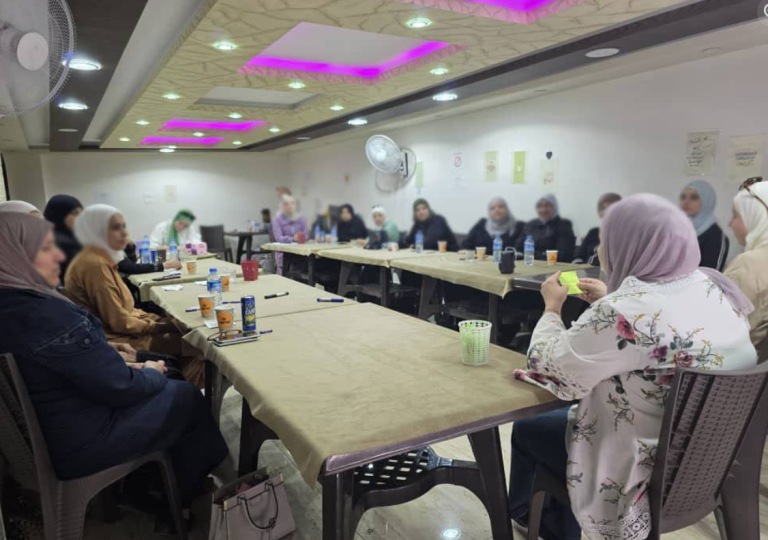
Through our Asfari Foundation capacity-building grant, we joined a deep dive on Agile and adaptive management in humanitarian and development work. The training framed agility across multiple layers: leadership, team working, structures, budgeting, and metrics.
A few key mindset shifts hit us hard:
1. Doing Agile vs. Being Agile
We realized that using digital tools (Slack, Trello, Miro, etc.) or holding occasional “stand-up” meetings does not make us agile. Being Agile means re-designing how decisions are made, how we plan, and how we learn.
2. From “big projects” to “small bets”
Instead of designing a 12-month activity package and then defending it at all costs, we started thinking in terms of “small experiments” with clear hypotheses:
“If we run this new legal awareness format with 20 families, will engagement and understanding improve?” The point is not to be right; the point is to learn fast and scale what works.
3. Decentralized decision-making
Cross-border and refugee-hosting contexts already force a kind of de facto decentralization (different cities, remote teams, online collaboration). Our learning journey pushed us to formalize that: giving field staff clear decision spaces, instead of treating every adaptation as an exception.
4. Lean strategy: cutting the waste
We were introduced to “lean” thinking: systematically identifying activities, processes, and reports that do not directly contribute to value for our communities or to donor accountability—and cutting or simplifying them.
5. Agile budgeting and metrics
We explored agile budgeting (funding in tranches, linked to learning and results rather than fixed activity lists) and agile metrics (focusing on value delivered, feedback from beneficiaries, and cycle times rather than just counting activities).
This was not only technical; it was psychological. Many of us are used to surviving in systems where changing the plan is “dangerous” and mistakes are punished. Agile asks us to do the opposite: surface uncertainty early, make it visible, and treat it as normal.
5. What Agile could look like in Syrian NGOs (concrete practices)
Below are practical ways we are trying to apply Agile thinking in our Syrian and refugee context. You can adapt these in your own organization.
5.1 Short cycles instead of annual paralysis
- Plan in 3-month sprints within the larger project frame.
- At the start of each cycle, define:
- 2–3 most important outcomes
- Key assumptions and risks
- Clear “definition of done” for each output
- At the end of each cycle, hold a retrospective with staff and, where possible, community representatives:
- What worked?
- What did not?
- What will we change in the next cycle?
5.2 Community-centred backlog
- Maintain a project backlog of ideas, needs, and requests coming from communities, staff, and partners.
- Re-prioritize it regularly based on value, feasibility, and risk.
- When the context shifts (new displacement, new legal restrictions), re-order the backlog instead of panicking.
5.3 Empowered field teams
- Define clearly which decisions can be taken by:
- Field staff
- Project coordinators
- Senior management
- Use simple rules like:
- “If the change is under X% of the budget and does not affect core outcomes, the field team can decide and document it.”
- This speeds up adaptation and reduces bottlenecks.
5.4 Minimum viable activity (MVA)
Instead of building a huge new intervention fully formed, start with a minimum viable activity:
- Small group, short duration, low cost
- Clear learning questions
- Simple feedback tools (short surveys, focus group, phone calls)
If it works, scale it. If not, pivot. This is safer in a volatile environment than committing to large, untested models.
5.5 Hybrid: Agile inside the logframe
Donors are not going to abandon logframes tomorrow. But you can:
- Treat logframe outcomes as the North Star, and activities as flexible paths to get there.
- Negotiate adaptive language into contracts where possible (“indicative activities,” “adaptive management,” “learning agenda”).
- Use CLA-type language (collaborating, learning, adapting) to justify and document changes, which many donors already recognize.
6. How this changes our mindset as Syrian practitioners
For us, Agile is not a trendy buzzword. It is a survival strategy in a context where the only constant is change.
It pushes us to:
- Move from fear of change → to structured adaptation
- Move from perfectionism → to iteration and learning
- Move from centralized control → to trusted, supported local teams
- Move from project as paperwork → to project as a living system
In a country where people are exhausted by promises, reports, and conferences that change nothing on the ground, Agile is not just about efficiency. It is about honesty: admitting that we do not know everything upfront, and building organizations that are humble and flexible enough to learn alongside the communities we serve.
If the humanitarian and development sector wants to stay relevant in Syria—inside the country and in refugee-hosting states—it has to become more agile. As Syrian NGOs, we do not have the luxury of ignoring this. Our context forces us to choose: either we cling to rigid models designed for another world, or we embrace agility and build a practice of project management that is as dynamic and resilient as our people.
References
Agile Alliance. (n.d.). Agile Manifesto for Humanitarian and Development Project Management. https://agilealliance.org/
Global Partnership for Effective Development Co-operation (GPEDC). (n.d.). Effective development cooperation principles and adaptive approaches. https://effectivecooperation.org
Institute of Project Management. (n.d.). Agile project management principles. https://www.instituteprojectmanagement.com
Organisation for Economic Co-operation and Development (OECD). (n.d.). Effective development co-operation and adaptive management. https://www.oecd.org/dac/effectiveness/
ScienceDirect. (n.d.). Adaptive planning and hypothesis-driven project management literature. https://www.sciencedirect.com
Torrens University Australia. (n.d.). Scrum methodology, iterative delivery, and feedback-driven project management. https://www.torrens.edu.au
UNHCR. (n.d.). Results-based management and adaptive programming in refugee contexts. UNHCR Data Portal. https://data.unhcr.org
USAID Learning Lab. (n.d.). Collaborating, Learning, and Adapting (CLA). https://usaidlearninglab.org/cla
Winrock International. (n.d.). Adaptive management and learning-oriented development practice. https://www.winrock.org